
Mind the Gap
Tips to Keep Going...

Dear Friend and Fellow Maker,
Between the ending of one creative project and the beginning of another is a gap that has the potential to trip me up, cause a long pause, or - in some cases - derail my efforts altogether. Have you ever found this to be so in your creative life?
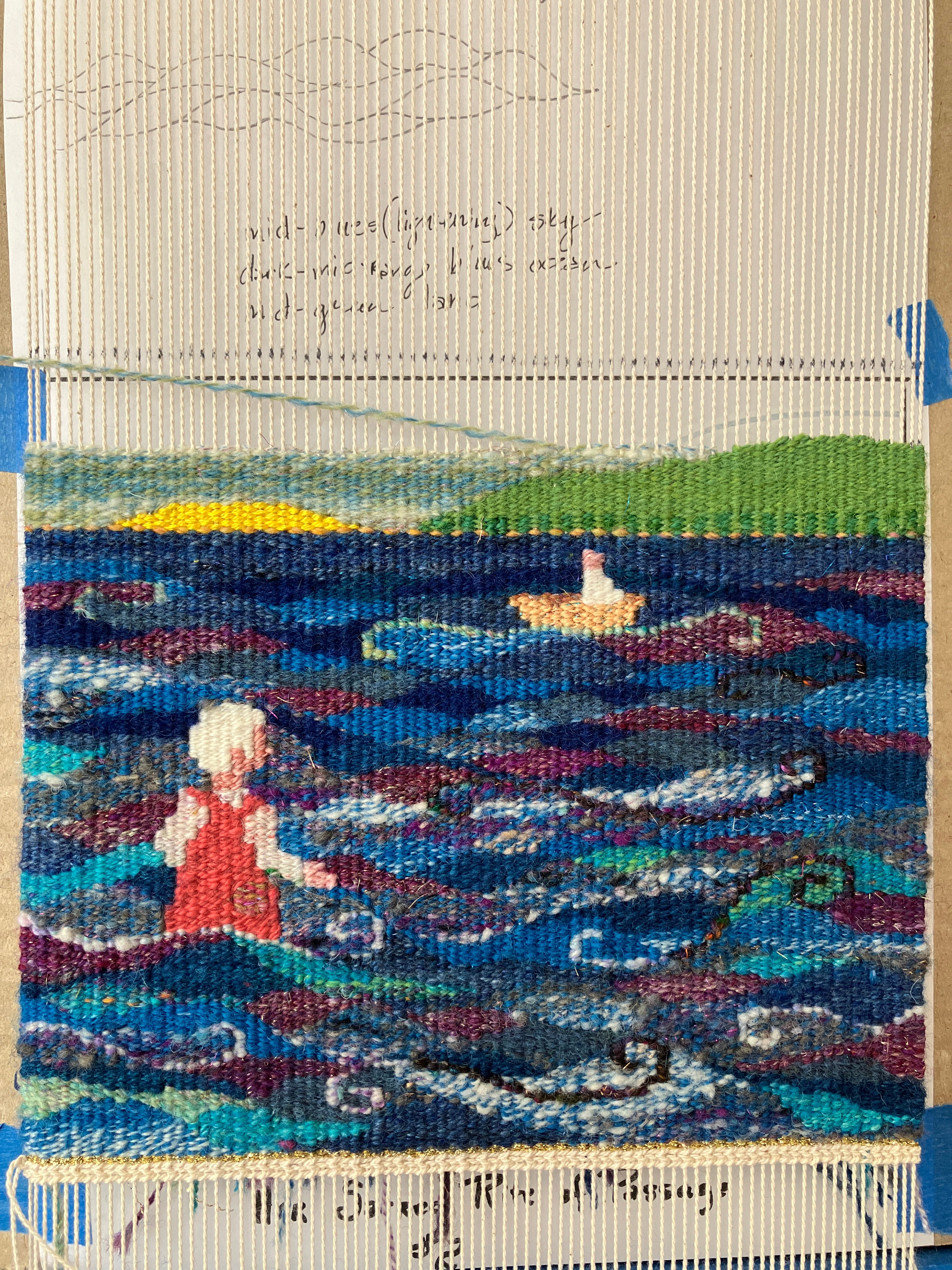
(On the home stretch with this second tapestry in a series titled Her Sacred Rite of Passage. I loved weaving the sky with this hand spun yarn, naturally making a lovely striated sky!)
Over the years of drawing & painting, knitting & spinning, and now weaving tapestry & illustrating children’s books, this “little” gap has presented numerous challenges. I’ve discovered a few tricks for navigating this gap, to keep it from becoming so wide and deep that I fall in, flailing around to get back up again and begin something new. Having a few tricks to bridge the gap between endings and beginnings, feels like having a rope bridge to string across the gap. The quicker I mind the gap, the less time is spent having to crawl my way across, and the easier it will be to begin the new project.
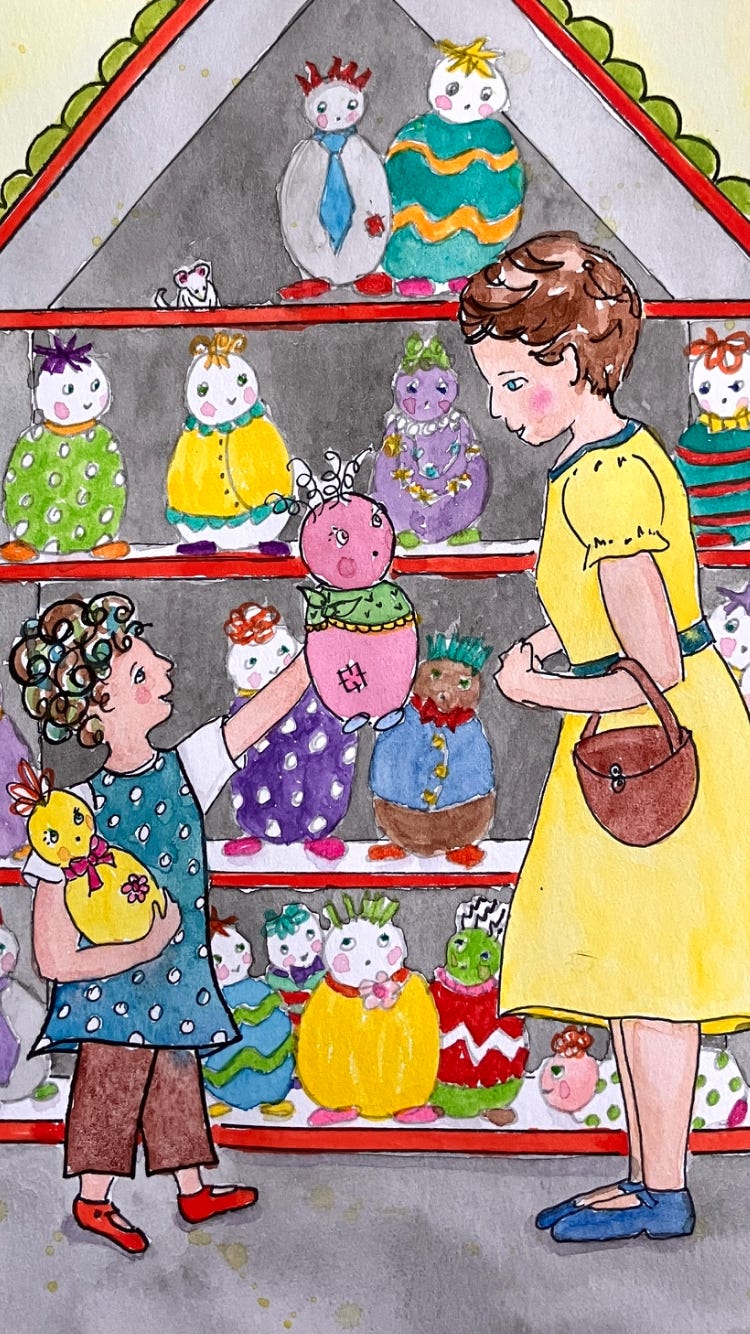
(A favorite illustration from my upcoming children’s picture book, Genevieve and the One Thing.)
Some examples of these gaps -
The end of a day of creative work to the next day’s session whether it be an hour or three hours of drawing & painting illustrations, or weaving tapestry.
The end of knitting the first sock to the beginning of the next in a pair of socks. The challenge is to complete the knitting of two socks, and not just one (Second Sock Syndrome).
The end of one stage of a long process (as in self-publishing a children’s book or in weaving tapestry) and needing to enter the next stage. Current Example: Illustrations are now complete, but need to be scanned in so the book can be created. 1
The end of weaving one tapestry. Then starting the next one. This gap, just like the previous three, can expand to such a degree that one falls right into the black hole of nothingness and it becomes very hard to climb out.
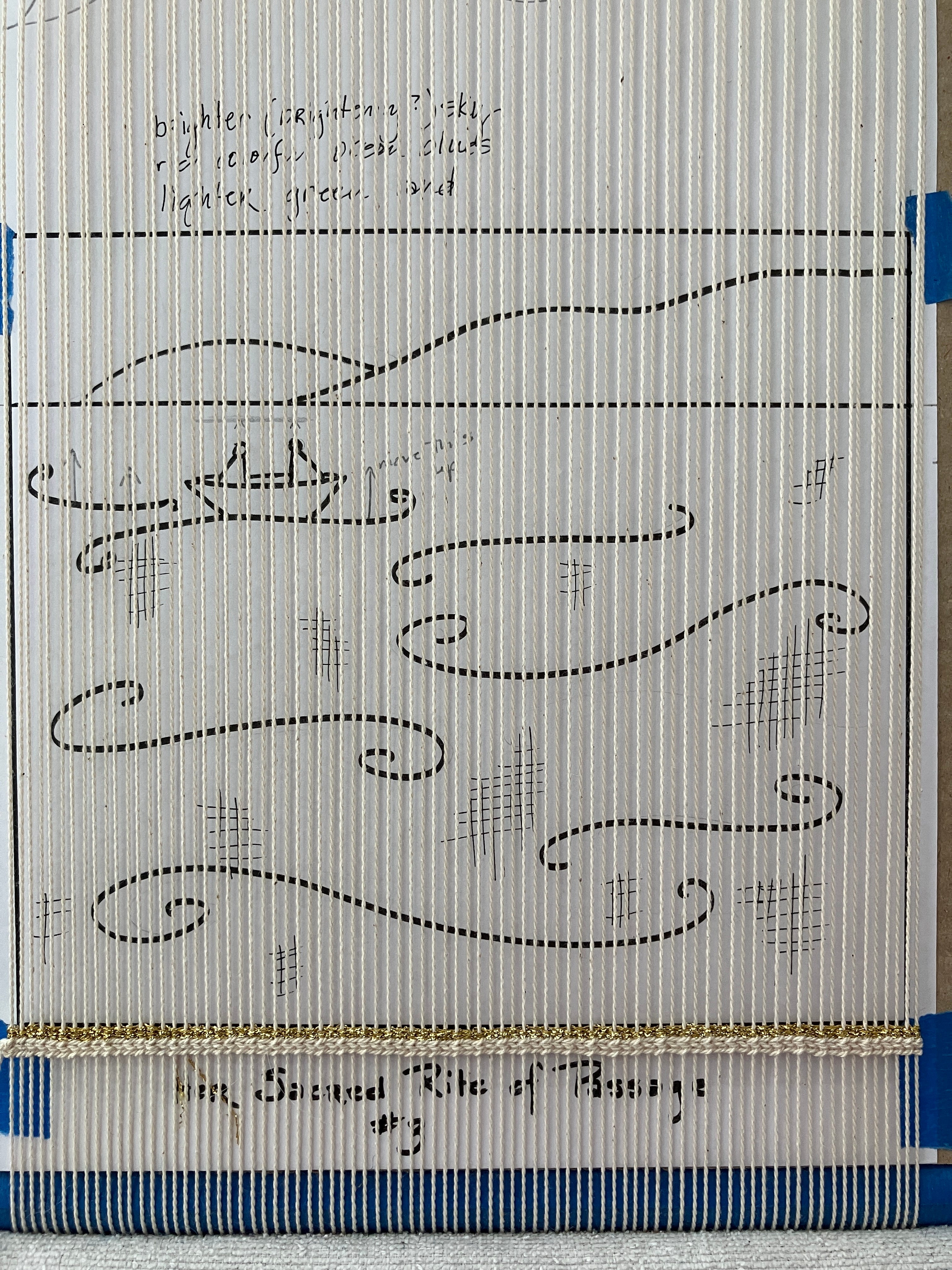
(Here I have just woven the footer and the golden thread that starts all my tapestries. 💗)
I’m sure there are more places and examples of where this gap occurs in our creative ventures, but they are just as important to navigate as the actual doing of a project.
How do we get from one project to the next one, from the end of one day’s work to begin the next day, to remain in some kind of flow so that the gap between projects is as small as possible?
I’ll offer my tips and tricks and then I’m hoping you will add your own in the comments below. I’d love to hear your gap-minding tools! I’m listing these as Possibilities, since I tend to use whichever one suits my needs in the moment, and none of them are “must-do’s” . I prefer to have possibilities sitting around to take hold of when I need them.
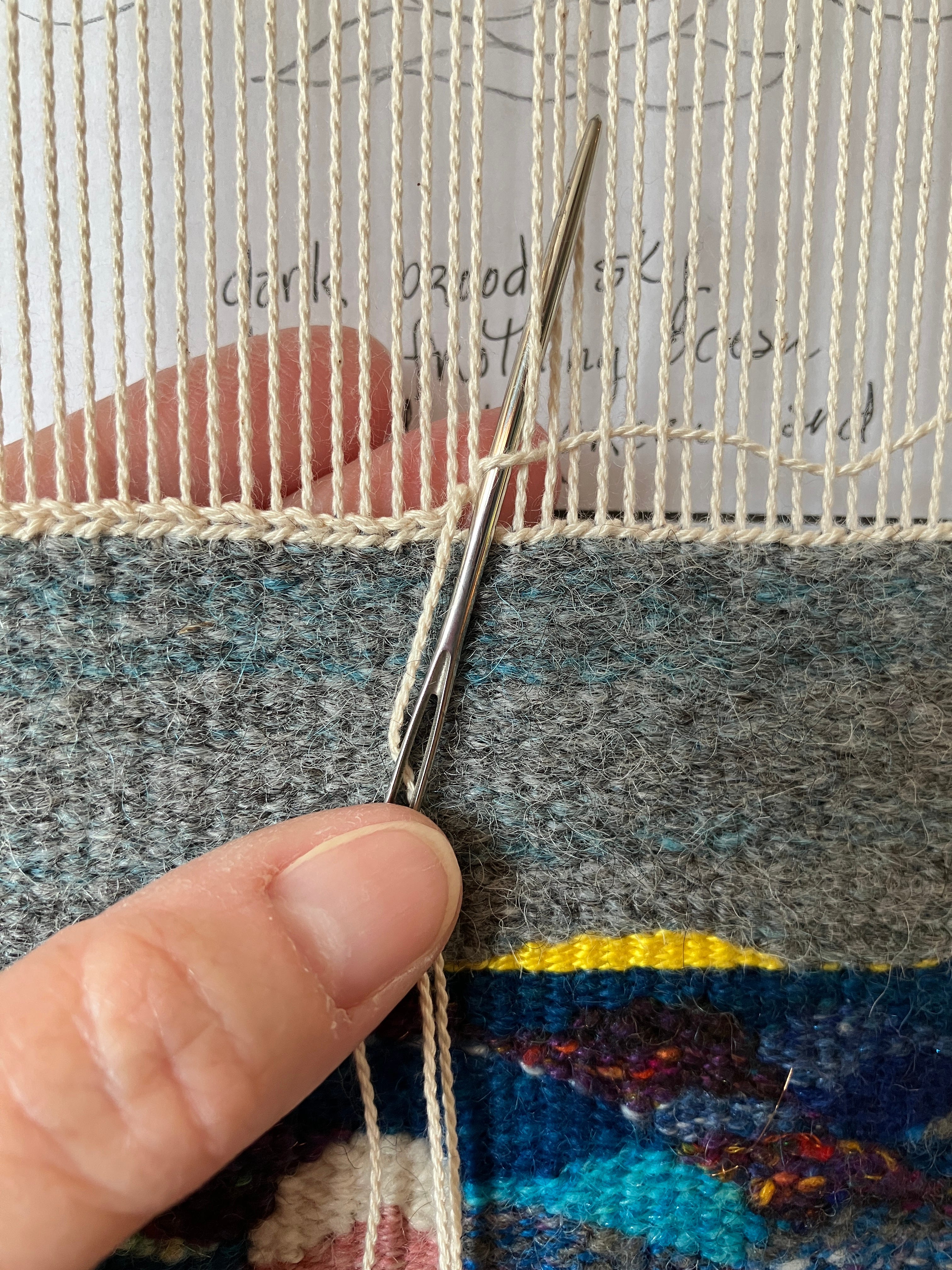
(Sometimes I save weaving the header for the next day, as a way of easing into the time I’ve set aside for weaving.)
Possibility #1 - End with Easy for the next Day
Years ago, a read a blog of a fellow painter (I so wish I could remember her name 🤷🏻♀️), who said that at the end of her day or painting session, she would purposefully stop working on the painting in the middle of a fairly easy, simple and straightforward passage. This allowed her to step into her studio the following day knowing that what she faced on the canvas would not be too intricate or taxing. She could just ease into working and face the more difficult passages once she was warmed up. I have loved this bit of advice and I now employ it all the time, especially with tapestry weaving. This artist also said that if she is nearing the end of a painting, she will stop just shy of finishing, so that the next day begins with work she knows how to finish and this gets her warmed up and ready for starting the next painting.
This works beautifully with tapestry weaving. If I only have a little bit left to weave on a tapestry, I will save it for the very first thing I do in the studio the next day. This little bit of weaving eases me into the flow of working and once the tapestry is finished, then the creative motivation to begin the next one is much easier to call forth. This is especially important if I leave on vacation or am going to be away from my looms or a couple of days. If I leave myself a simple passage to weave, or just a little left to weave on a tapestry, then I can step into flow much more easily when I have returned to the studio.
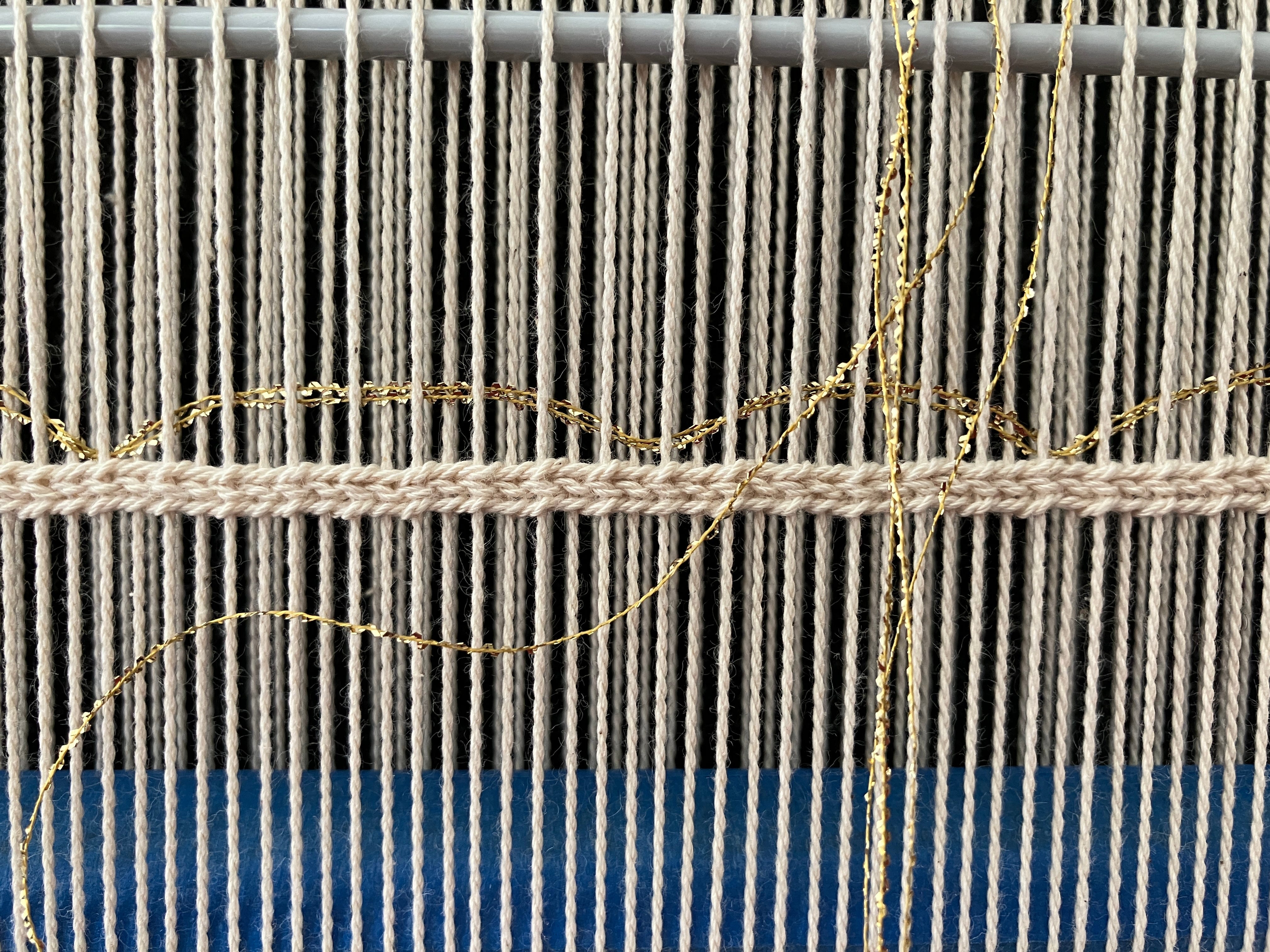
(The Golden Thread. ⭐️)
Possibility #2 - From Complete to Begin the Next in 0-2 seconds.
If I do complete a tapestry, or finish knitting one sock, then I will dive right into the next one, doing the set-up work for the next tapestry or cast on for the next sock. This propels me into the next project so that the gap between the previous work and the new one is minimal. I am much more apt to pick up and knit a pair of socks if the the cuff has already been cast on, and a few rows have been knitted. In the case of woven tapestry, if I am able to warp the loom for the next tapestry, or weave the footer, then I’m able to weave much more freely when I return to the loom.
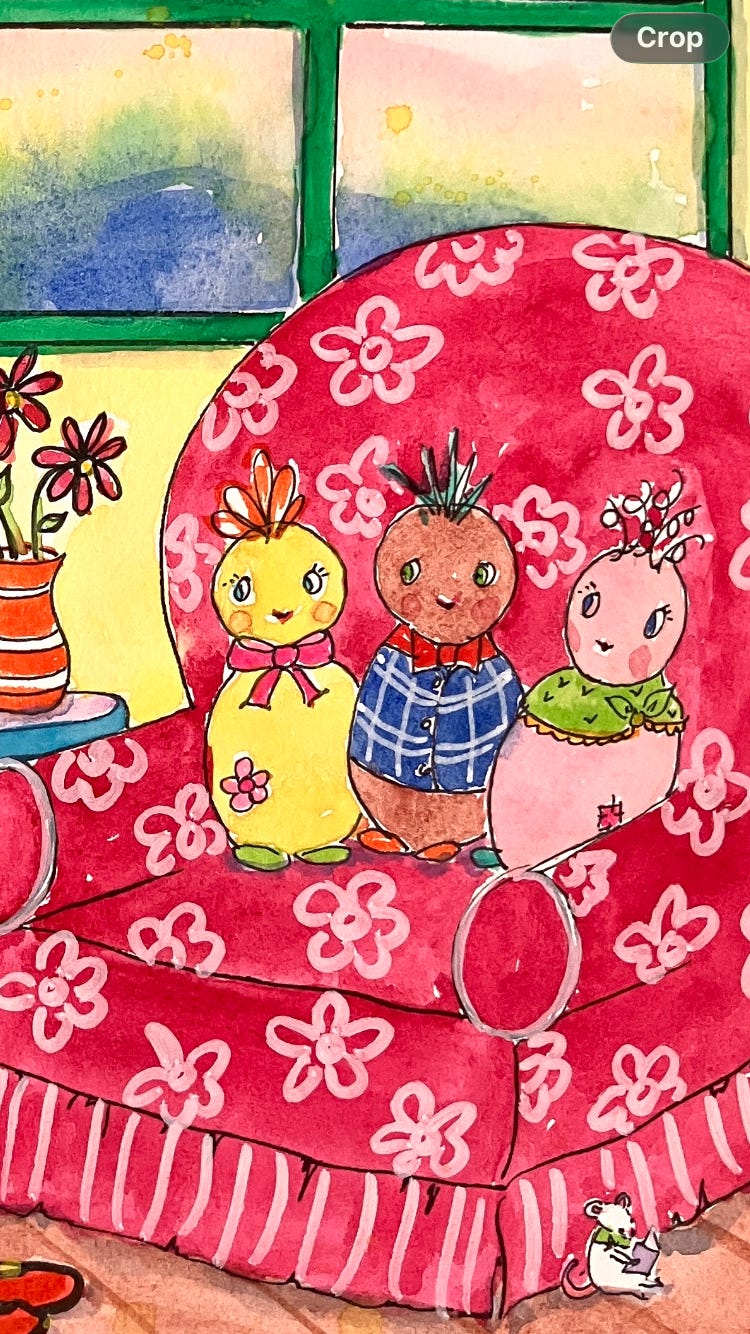
(Cute little Things aren’t they? 🤩)
Possibility #3 - Breakdown Big Projects into Small Do-Able Steps
In the case of long-term projects, such as illustrating a book I’ve written, or weaving a tapestry, there are many steps involved in these types of creative work. Breaking down the entire project into as many small steps as possible is SO VERY HELPFUL, as it reduces the mountain that is the finished illustrated book, or the completed tapestry, into small little hills that are far less daunting than the mountain. Some days, it is encouraging to just be able to say that I added watercolor to ONE illustration. Or that I just gathered some yarns that might work in the next tapestry. No matter that I haven’t woven the entire thing! What counts is that I have taken one step, no matter how small, toward the completion of a project, and that is forward movement!
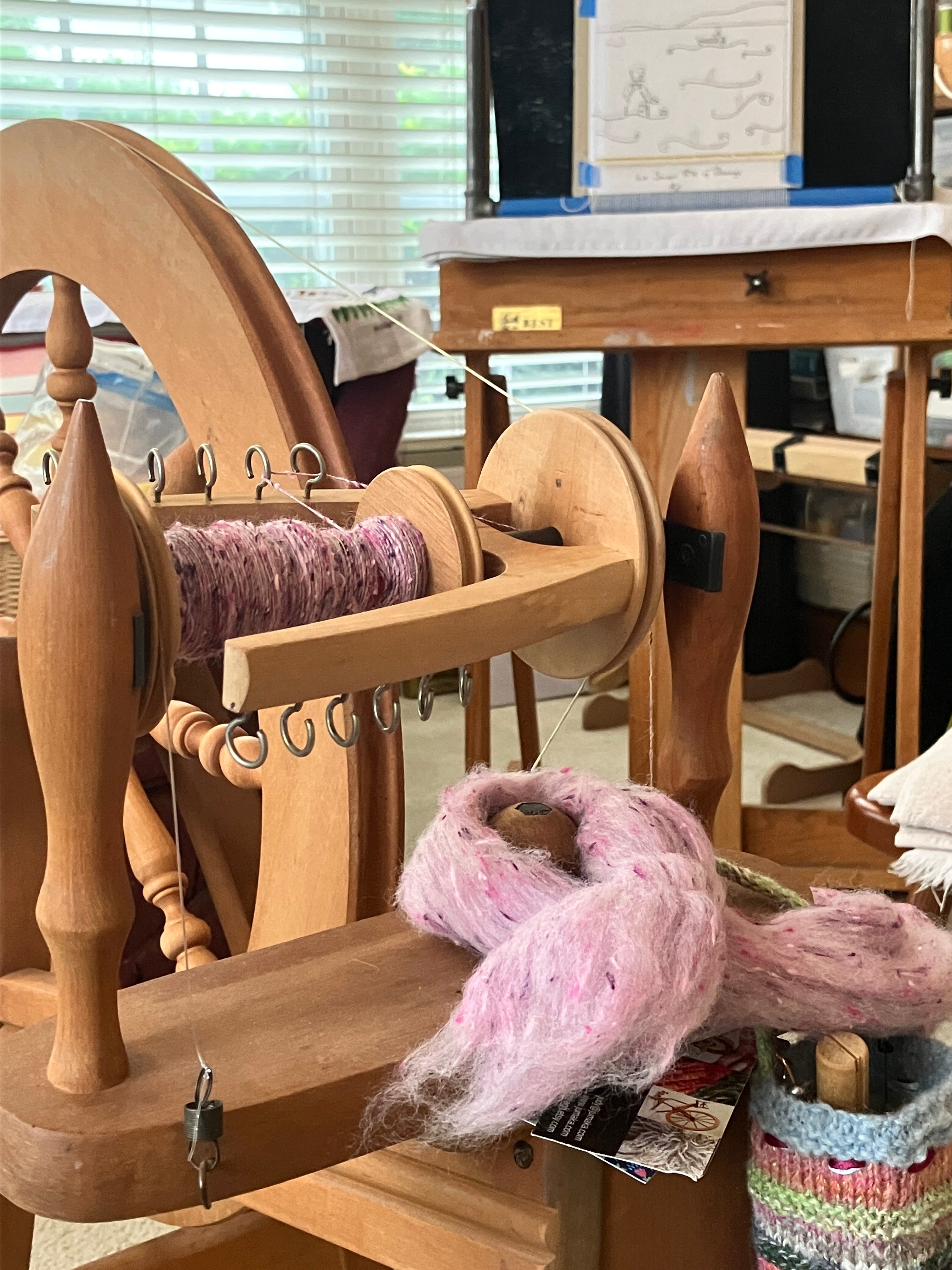
(A lovely way to “sit in the gap”…💗 This yarn will likely become something I weave into a tapestry one day!)
Possibility #4 - Productive Procrastination
Sometimes a gap begins to widen farther than I would like. This can be due to life events intervening, or other needs presenting themselves in either creative or personal work. At times, the gap between projects opens up due to feeling that I am not equal to the task ahead, overwhelmed with either the skill required, the time needed, or the technical ability. I will dilly-dally and dawdle for quite a while before I dive into the computer work that is necessary for making the picture book illustrations actually come to life on paper. At times like these, a bit of Productive Procrastination is helpful. I will turn to something else - a bit of knitting, sketching in my sketchbook, spinning some wool - as I camp out in the gap for a time, before my motivation ramps up again to tackle what may seem daunting. At least I am moving forward in something! Even if it isn’t exactly the task at hand, the long-term creative project I am working diligently toward.
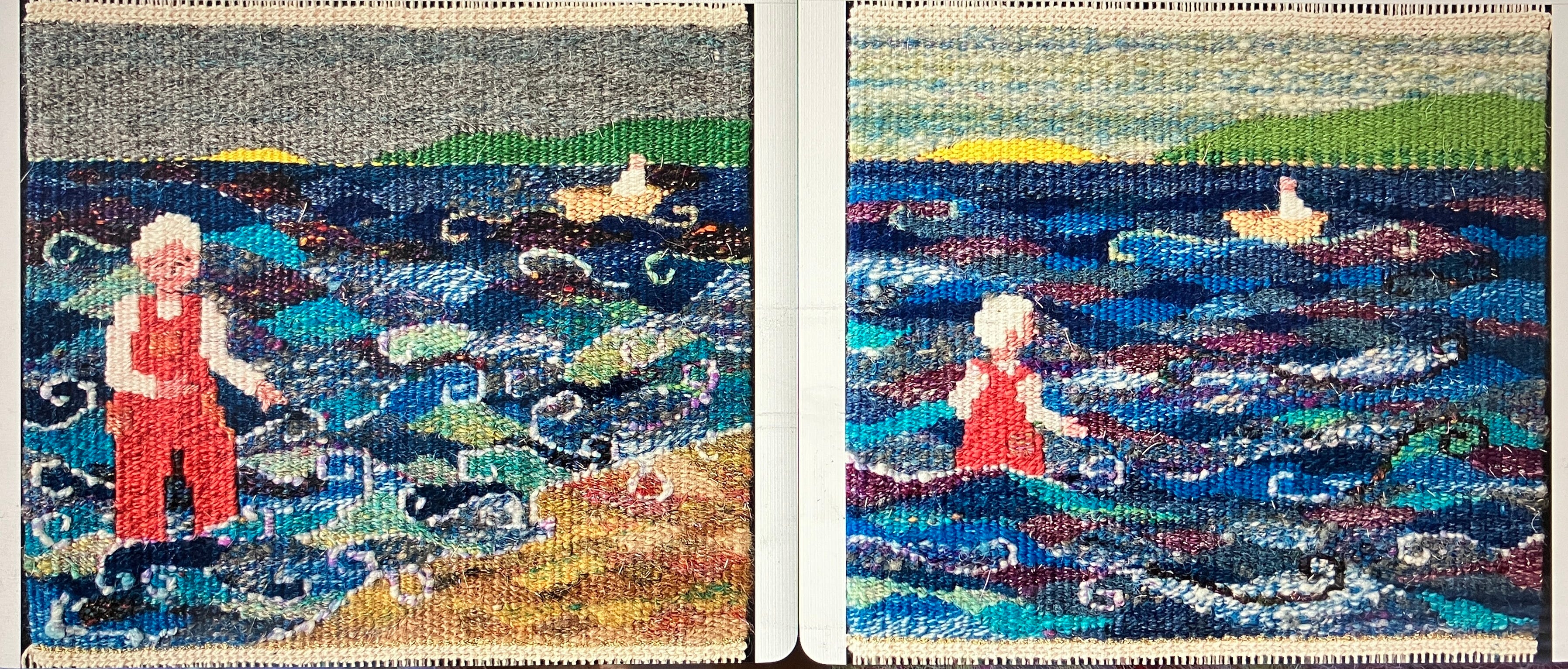
(The first two tapestries in the series. Each are 8” x 7”. Two more to go. The Triptych will have a fourth. Is that a Quartych? 🧐)
How about you? What tips and tricks do you employ to ensure that you keep on keeping on? Are there ways that you navigate the fateful Gap that can yawn wide and derail you from beginning your next creative work? Thank you as always for being here!
With gratitude,
Jennifer
P.S. In case you missed it, you are still able to register for the Tapestry Talk I gave on Zoom for the Damascus Fiber Arts Group. Here is the link to register. They will then send you a link to be able to listen/watch the presentation. You’ll get to hear about The Golden Thread and what it is! 💖
I have successfully scanned all 32+ illustrations for my next children’s picture book, Genevieve and the One Thing! Now to make color corrections and begin working in Affinity Publisher! 😍 That sounds like easy-peasy, right? Actually it is quite daunting as there are a million little steps contained within those words “color corrections and Affinity Publisher”. Whew. 😰. I think I need to spin some wool! 😂
A note about the terms “footer” and “header”. I am unsure as to whether these are actual tapestry terms. I need to go look that up! I use the term to mean the rows of twining that I add at the beginning and the end of every tapestry. I know other weavers do not use this at the beginning, or they might twine only a couple of rows. Some tapestry weavers put in a row of double half-hitch knots and I think that would be nice and secure. I just started doing this years ago and haven’t changed my habit. I like the look of it. 😜